

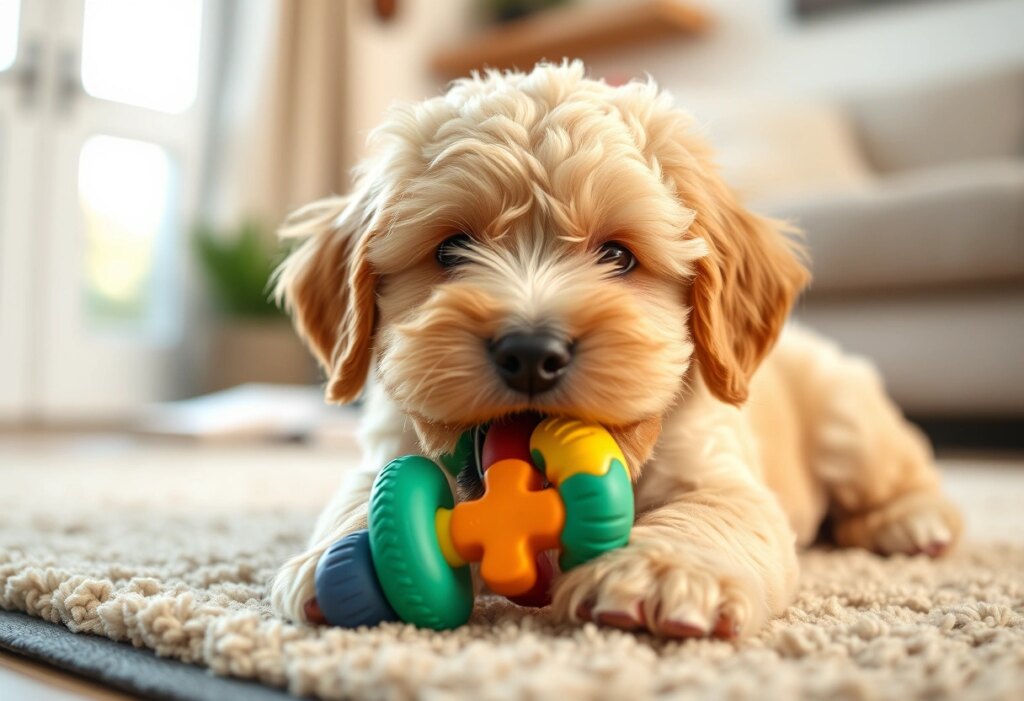
Puppy teething toys can turn a frantic, mouthy phase into a manageable (and even sweet) part of raising your Doodle. If your Goldendoodle is gnawing on your coffee table legs or your Labradoodle puppy is growling like a tiny dragon every time you reach for the remote, you’re not dealing with a bad dog. You’re dealing with a teething dog, and the right toys make all the difference.
Doodle puppies go through a teething window that typically runs from around 3 to 7 months of age. During that stretch, those 28 baby teeth gradually fall out and get replaced by a full set of 42 adult teeth, according to the American Veterinary Dental College and related veterinary dental resources. That’s a lot of tooth movement happening in a small mouth, and it comes with real discomfort. The biting, the growling, the obsessive chewing on anything within reach? It’s your puppy’s way of coping with sore gums, not a sign of aggression.
Why Doodle Puppies Bite and Growl During Teething
Teething pain is intense, even if your puppy can’t tell you that in words. The pressure of applying teeth and jaw to something firm actually relieves some of that ache, which is why your Bernedoodle puppy suddenly wants to chew your shoelaces, your fingers, and the corner of your couch cushion with equal enthusiasm. Growling during chew sessions is often just excitement or focus, not a warning sign. Puppies growl at toys the same way toddlers get loud during a tantrum. It’s a release valve, not a threat.
That said, the behavior can escalate if there’s nothing appropriate to redirect onto. A puppy with sore gums and no outlet will find one, and it’s usually your hands or your furniture. This is exactly where good puppy teething toys step in. They give your Doodle a job to do with that discomfort, something satisfying to gnaw on that isn’t your ankle. If you’re also noticing your puppy’s biting feels more intense or frequent than typical teething behavior, this article on Puppy Biting: Red Flag or Normal? When to Call a Trainer walks through how to tell the difference.
What to Look for in Safe Teething Toys for Doodle Coats and Jaws
Not every chew toy on the shelf is a good match for a Doodle. Because Goldendoodles, Labradoodles, and Bernedoodles come in a wide range of sizes (from mini to standard), fit matters. A toy that’s perfect for a 10-pound Mini Poodle mix could be a choking risk if it’s too small, while a toy designed for a tiny breed might not hold up to the jaw strength of a growing Standard Bernedoodle.
Here’s what actually matters when picking teething toys for puppies:
- Rubber hardness and flexibility. Softer rubber toys feel better against inflamed gums during peak teething weeks, while firmer rubber holds up better as adult teeth come in and chewing gets more aggressive.
- Size appropriate to current and future size. Doodles grow fast. A toy that fits a 12-week-old puppy’s mouth may be swallowed whole by month five, so size up intentionally.
- Textured surfaces. Nubs, ridges, and grooves help clean teeth and massage gums simultaneously, which is especially soothing during the molar-eruption stage.
- Easy to clean. Curly-coated Doodles already shed less but drool and slobber plenty during teething, so dishwasher-safe or easily rinsed toys save you a step.
- No small detachable parts. Squeakers, pom-poms, and stuffing are tempting but risky for a puppy whose whole personality right now is “chew it until it breaks.”
Treat-stuffable toys deserve a special mention here. They slow down frantic chewing by turning it into a longer, calmer activity, which is genuinely helpful when your puppy is overtired and overstimulated (a common teething combo).

Top 5 Puppy Teething Toys Reviewed for Goldendoodles, Labradoodles, and Bernedoodles
These five picks cover different price points, textures, and durability levels, so you can match the toy to your Doodle’s current chewing intensity and size.
1. Multi-Pack Puppy Chew Toy Sets
For households with a brand-new Doodle puppy, a variety pack takes the guesswork out of figuring out what texture your pup actually prefers. The MRSOHRET 20Pcs Puppy Chew Toys for Teething set gives you a rotating lineup of shapes, textures, and firmness levels, which is handy because puppies often go through phases where they ignore a toy for days, then suddenly become obsessed with it. Having a stash on hand means you’re never stuck with nothing to redirect onto.

- 20 Pack dog toys for puppies: Packaging includes 7 dog rope toys, 3 toothbrush rubber toys, 1dog training bell, 2 plush …
- Puppy chew toys:When a dog has teeth, is bored, or relieves stress, it can easily damage shoes, sofas, and various house…
- Puppy toys to keep them busy: Dog rope toys are very suitable as interactive toys to play with furry friends and can imp…
This option works especially well for Mini and Medium Doodles still in the earliest teething stages, where small, soft toys are more comfortable on tender gums. It’s a budget-friendly way to stock up without committing to one single toy that might not land.
2. Treat-Dispensing Rubber Activity Balls
Rubber activity balls that dispense kibble or treats slow puppies down and give them a satisfying job to focus on, which tends to lower overall mouthiness throughout the day. The KONG Puppy Activity Ball, Natural Rubber Teething Toy is made from softer rubber specifically formulated for younger teeth and sore gums, which makes it a solid match for the 3 to 5 month window when teething pain tends to peak.

- Promotes Healthy Chewing: This teething puppy toy is made from the KONG’s Natural Puppy Rubber to soothe gums and make c…
- Treat-Filling Capabilities: The hollow interior allows for stuffing with kibble, peanut butter, or KONG Snacks and Easy …
- Durable Natural Rubber Dog Toy: The KONG Classic red rubber formula is created for average chewing dogs, and is recommen…
Goldendoodle and Labradoodle puppies in particular tend to love the unpredictable bounce and roll of activity balls, since both breeds carry some retriever instinct that makes chasing and mouthing objects naturally rewarding.
3. Heavy-Duty Bone-Shaped Chews for Growing Jaws
As your Doodle puppy approaches 5 to 7 months, adult teeth start coming in and jaw strength increases noticeably. This is when softer toys start getting destroyed quickly, and you need something tougher. The Durable Dog Chew Toys for Large Dogs, Tough Bone-Shaped design holds up well against the increased bite force of a Standard Goldendoodle or Bernedoodle heading toward adolescence.

- 🦴【Ultra-Durable & Long-Lasting Dog Chew Toy】 Designed for aggressive chewers, this indestructible dog toy features an ex…
- 🦷【Promotes Dental Health & Fresh Breath】 More than just dog bones, this chew toy has a textured TPR surface that cleans …
- 🐶【Keeps Dogs Engaged & Mentally Stimulated】 Boredom-busting ridges and bright colors make this one of the best interacti…
This is a mid-tier to premium investment compared to softer puppy-stage toys, but it earns its keep by lasting through the rougher final months of teething instead of getting shredded in a week.
4. Textured Rope and Rubber Combo Toys
Combination toys that pair rope with rubber nubs give your puppy two different sensations in one object, which keeps interest high. The rope section works great for gentle tug games that build bite inhibition, while the rubber portion handles the harder gnawing. These tend to run on the affordable end and are easy to find in multiple sizes, which matters since Doodles range so widely in adult weight.
5. Frozen-Ready Textured Teething Rings
Teething rings designed to be chilled or frozen offer a numbing effect against inflamed gums, similar to how a cold washcloth helps a human baby. These are especially useful during flare-up days when your puppy seems more uncomfortable than usual. Many pet parents keep two in rotation in the freezer so there’s always a cold one ready to swap in.
Here’s a quick side-by-side look at how these categories compare:

| Toy Type | Best For | Rubber/Material Firmness | Price Tier |
|---|---|---|---|
| Multi-Pack Chew Sets (MRSOHRET) | Early teething, Mini/Medium Doodles | Soft to Medium | $ |
| Treat-Dispensing Activity Ball (KONG) | Mid-teething, mental stimulation | Soft Natural Rubber | $$ |
| Heavy-Duty Bone Chew | Late teething, Standard-size Doodles | Firm/Durable | $$$ |
| Rope and Rubber Combo | Bite inhibition and tug play | Mixed (Soft Rope + Medium Rubber) | $ |
| Frozen Teething Rings | Gum inflammation flare-ups | Soft (Gel/Rubber) | $$ |
If you’re still building out your puppy’s toy rotation beyond these five, our roundup of 9 Best Teething Toys for Puppy Biting Stage (2026) covers even more options sorted by chewing intensity.
Positive Reinforcement Redirection Techniques
Having good puppy chew toys on hand solves half the problem. The other half is teaching your Doodle, in the moment, that teeth belong on toys and not on skin or fabric. The American Veterinary Society of Animal Behavior supports reward-based training over punishment-based correction when it comes to building healthy bite inhibition in young dogs, and this approach tends to work especially well with the sensitive, people-pleasing temperament common across Doodle breeds.
“Punishment-based methods can increase fear and anxiety without addressing the underlying cause of the behavior. Reward-based training builds trust and teaches puppies what you want them to do instead.” (adapted from AVSAB position statements on humane dog training)
In practice, redirection looks like this: the moment your puppy’s teeth touch your hand or pant leg, calmly remove the body part, say a neutral “ah-ah” or similar interrupter, and immediately offer an appropriate chew toy instead. When they take the toy, praise them warmly or offer a small treat. Repeated consistently, this teaches your Doodle that toys get rewarded and skin does not, without any yelling, scruff-grabbing, or nose-tapping needed.
Short, frequent training sessions work better than long ones with a teething puppy, since their attention span and patience are both running on limited reserves. Five minutes of redirection practice, several times a day, tends to produce faster results than one long session.
When Aggressive Biting Signals a Behavioral Issue
Most mouthy behavior during this stage is completely normal and resolves as adult teeth finish coming in. But there are moments when biting crosses from “typical puppy teething toys needed” territory into something that warrants closer attention. Watch for biting that draws blood repeatedly, growling paired with stiff body language or raised hackles, or biting that seems to happen out of frustration rather than discomfort, especially if it’s directed at family members during calm moments rather than play.
If you’re noticing these patterns, it’s worth getting a second opinion rather than assuming more chew toys will fix it. The guide on Puppy Biting: Red Flag or Normal? When to Call a Trainer breaks down specific warning signs that separate normal teething frustration from something a certified trainer or veterinary behaviorist should evaluate. Catching a behavioral issue early, while your Doodle is still young and highly trainable, makes a real difference in long-term outcomes.
Also keep an eye on your puppy’s gums and teeth directly. Excessive drooling, visible swelling, bad breath beyond the usual puppy breath, or reluctance to chew on anything (even favorite toys) can indicate retained baby teeth or an infection that needs veterinary attention rather than just dog teething relief products.
Key Takeaways
- Doodle puppies typically teethe between 3 and 7 months, losing 28 baby teeth as 42 adult teeth come in.
- Biting and growling during this phase are usually normal responses to gum discomfort, not aggression.
- Good puppy teething toys should match your Doodle’s current size, jaw strength, and chewing stage.
- Reward-based redirection teaches better bite habits than punishment and fits the sensitive Doodle temperament well.
- Persistent, forceful biting outside of typical teething patterns deserves a trainer or vet evaluation.
Frequently Asked Questions
How many puppy teething toys does a Doodle actually need?
Most pet parents find that having 4 to 6 toys in rotation works well, mixing textures like soft rubber, rope, and firmer chews. Rotating toys every few days keeps your puppy’s interest high and gives you backup options when one gets too worn down to use safely.
Are frozen teething toys safe for Doodle puppies?
Yes, frozen rubber or gel-filled teething toys are generally safe and can offer real relief during flare-up days. Just supervise the first few uses to make sure your puppy isn’t chewing off small frozen pieces, and avoid anything that gets rock-hard enough to risk tooth damage.
Why does my Doodle puppy growl while playing with teething toys?
Growling during toy play is usually just excitement or intense focus, not a sign of aggression. Puppies often get vocal when they’re really invested in gnawing on something satisfying. If the growling comes with stiff body language or happens outside of play, that’s when it’s worth a closer look.
Can the wrong teething toy hurt my puppy’s teeth or jaw?
Yes, toys that are too hard (like real bones, antlers, or hard nylon) can crack a puppy’s developing teeth. Stick with rubber-based puppy teething toys designed for the teething stage specifically, and avoid anything you can’t dent slightly with a fingernail.


