


Finding a fresh mat behind your Goldendoodle’s ear after you just brushed her yesterday is enough to make any pet parent want to throw the brush across the room. The right slicker brush for goldendoodle coats needs a few specific features to actually work: flexible pins that reach the undercoat without scraping skin, ball-tipped tips for comfort, and a pin length matched to your dog’s coat density. Get those three things right, and matting drops dramatically. Get them wrong, and you’re just rearranging tangles instead of removing them.
This guide walks through exactly what separates a slicker brush that prevents mats from one that just pushes them around. We’ll cover the coat science behind why Goldendoodles mat in the first place, the anatomy of a quality brush, how slicker brushes stack up against other detangling tools, and a routine you can actually stick to.
Why Goldendoodle Coats Mat So Easily
Goldendoodles inherit two very different coat instructions and that combination is exactly why they mat so fast. The Poodle side brings a tight curl gene, and the Golden Retriever side brings a dense undercoat built for warmth and water resistance. When those two traits layer together, loose hair gets trapped inside the curls instead of falling away naturally.
F1B Goldendoodles (bred back toward the Poodle line) tend to have the curliest, most Poodle-like coats, which means more surface area for hair to twist around itself. Wavy F1 coats mat less aggressively but still trap undercoat fluff near the ears, armpits, and collar area. The American Kennel Club notes that mixed-breed coats combining curl and undercoat traits require more frequent, more deliberate grooming than either parent breed alone.
That’s the core problem a slicker brush has to solve. It’s not just moving hair around on top of the coat, it needs to get down to the skin and pull out the loose undercoat before it has a chance to felt together into a mat.

Slicker Brush Anatomy: What Actually Matters
Not all slicker brushes are built the same, and the differences aren’t cosmetic. Here’s what to check before you buy one for a Goldendoodle’s coat:
- Pin length: Longer pins (around 1 inch) reach through thick, curly coats to the undercoat. Shorter pins work fine on puppies or thinner wavy coats but leave mats untouched on adult curly coats.
- Flex-head design: A brush head that flexes slightly reduces pressure on the skin and follows the curve of the body, which matters a lot on bony areas like hips and legs.
- Pin tip coating: Ball-tipped pins are gentler and reduce the risk of scratching skin, especially useful for Goldendoodles with sensitive or allergy-prone skin.
- Handle ergonomics: A contoured, non-slip handle matters more than people expect. Grooming sessions on a full Goldendoodle coat can take fifteen to twenty minutes, and hand fatigue leads to rushed, incomplete brushing.
- Pin density: Tightly packed pins pull more hair per stroke but can feel harsher. Looser pin spacing is gentler but requires more passes.
A quality slicker brush for mini Goldendoodles often needs a slightly different pin density and head size than what works for a standard-sized dog, since smaller frames mean tighter curves and less surface area to work with.
Rounding Out the Toolkit: Combs and Shampoo That Support the Slicker Brush
A slicker brush shouldn’t be the only tool in your grooming kit. After slicker brushing, running a Metal Comb for Dogs through the coat helps confirm you actually reached the skin and didn’t just skim the surface. If the comb glides through cleanly, you’re done with that section. If it catches, there’s still undercoat hiding underneath.

- EASY DEMATTING & DETANGLING: Our dog grooming comb features extra-long stainless-steel teeth that glide through tough kn…
- EXTRA LONG PINS: Engineered with PINs that are 30% longer, this dematting comb reaches deeper into dense, curly, or long…
- ERGONOMIC HANDLE: Designed with a non-slip, ergonomic handle, this metal dog comb ensures a secure grip and reduces hand…
Bath time matters too. A slippery, tangled coat is far harder to brush than one that’s been properly conditioned. A detangling formula like Dog Shampoo Half Gallon, Cleans, Conditions & Detangles softens the coat before it dries, which makes the next brushing session noticeably easier on both of you.

- LARGE VALUE SIZE (64 OZ): Save time and money with our extra-large half gallon 64oz bottle of premium dog shampoo, suita…
- 4-IN-1 DOG SHAMPOO: Effectively cleans, conditions, detangles, and moisturizes your dog’s skin. Keep your dog’s fur soft…
- PROUDLY MADE IN THE USA: Our shampoo for dogs is a quality American-made product formulated and tested in the best facil…
Slicker Brush vs Self-Cleaning Brush vs Undercoat Rake
Choosing the right tool for mat prevention isn’t a one-size-fits-all decision. Each option has a specific job, and understanding where they overlap (and where they don’t) saves you money and frustration.
Improper brush selection is cited by more than 60% of professional groomers as a leading cause of coat damage in double-coated and mixed-breed dogs, according to trends tracked by the National Dog Groomers Association. Using the wrong tool doesn’t just fail to prevent mats, it can actively damage the coat.
A traditional slicker brush for goldendoodle coats is the workhorse for everyday maintenance and light mat prevention. Self-cleaning versions, like the Self-Cleaning Deshedding Dog Cat Brush, Thick Double Coat, retract the pins with the push of a button so you’re not spending five minutes picking hair out of the bristles after every session. That convenience matters if grooming fatigue is the reason sessions get skipped.
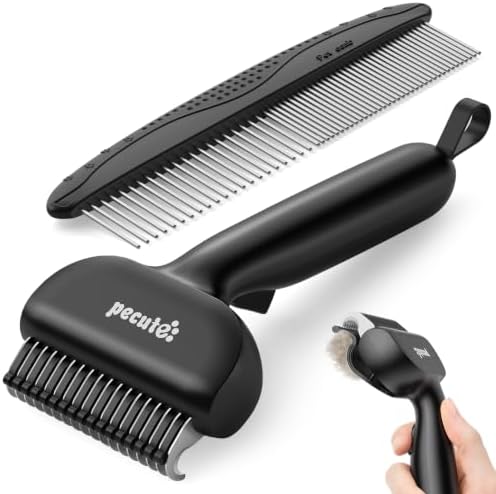
- 1-CLICK SELF-CLEANING — NO MORE MANUAL HAIR PULLING: This undercoat rake solves the grooming frustration. Just press the…
- REMOVES UP TO 95% OF LOOSE FUR — DESIGNED FOR THICK DOUBLE COATS: Engineered specifically for dense undercoats and heavy…
- GENTLE DEMATTING — ROUNDED TEETH GLIDE WITHOUT IRRITATING SKIN: Unlike sharp dematting rakes for dogs, our fine-polished…
Undercoat rakes solve a different problem entirely. They’re built to pull loose undercoat out from underneath an already-established topcoat, which makes them better suited for seasonal shedding management than daily mat prevention. If you’re trying to decide between the two for your dog’s specific coat type, this breakdown of slicker brush vs undercoat rake for Goldendoodles goes through the tradeoffs in more depth.
| Tool Type | Best For | Mat Prevention Strength | Skin Gentleness | Price Tier |
|---|---|---|---|---|
| Traditional Slicker Brush | Daily/weekly maintenance | High | Moderate (varies by pin tip) | $$ |
| Self-Cleaning Slicker Brush | Frequent brushers who want less cleanup | High | Moderate to High | $$$ |
| Undercoat Rake | Seasonal shedding, thick undercoats | Moderate | Moderate | $$ |
| Metal Comb | Finish work, checking for missed tangles | Moderate (supportive tool) | High | $ |
Choosing the Right Slicker Brush by Coat Type
Not every Goldendoodle needs the same setup. Coat type should drive your decision more than brand reputation or price.

- Curly F1B coats: Longer pins, medium-firm density, ball tips for comfort during longer sessions.
- Wavy F1 coats: Medium pin length, moderate density, less frequent but still consistent brushing.
- Puppy coats: Short, soft pins to build a positive association before the adult coat comes in around six to twelve months.
If you’re still narrowing down options by coat texture and shedding pattern, this guide to the best brushes for Goldendoodle shedding by coat type breaks it down by specific coat category rather than one general recommendation.
A Step-by-Step Line-Brushing Routine That Actually Prevents Mats
Random brushing on the surface of the coat is one of the biggest reasons mats keep coming back even in dogs that get brushed “regularly.” Line brushing fixes that by working in sections, from skin outward.
- Start at the skin, not the surface. Part the coat in small sections and brush from the base of the hair outward, not just over the top layer.
- Work in one-inch sections. Move through the body systematically: legs, chest, ears, tail, then the back and sides.
- Follow with a comb check. Run the metal comb through each section after brushing to confirm no hidden tangles remain near the skin.
- Focus on friction zones. Behind the ears, armpits, and the collar area mat first and fastest, so give those spots extra passes.
- Brush 3 to 4 times per week minimum. Daily is even better for curly F1B coats. Skipping more than a few days lets loose undercoat build up and start felting.
Consistency beats intensity here. A calm five-minute session four times a week does more for mat prevention than one exhausting hour-long fight every other Sunday.
Making Brushing a Positive Ritual
Mat prevention isn’t just about the tool, it’s about the experience your dog associates with it. Pair brushing sessions with calm praise, a favorite treat, or a spot on the couch your dog already loves. Keep initial sessions short if your Goldendoodle is anxious about grooming, and gradually build up duration as trust grows.
A properly chosen slicker brush for goldendoodle coats, paired with a gentle, consistent routine, turns grooming from a dreaded chore into a bonding moment. That shift in attitude, for both of you, is often what makes the difference between a coat that stays mat-free and one that keeps sliding backward.
How often should I use a slicker brush on my Goldendoodle?
Most Goldendoodles need slicker brushing three to four times per week at minimum, with curly F1B coats benefiting from daily sessions. Consistent, shorter sessions prevent mats far more effectively than occasional long ones.
Can a slicker brush remove mats that have already formed?
A slicker brush works best on preventing mats, not removing severe ones. For small, early-stage tangles it can help, but tight mats close to the skin usually need a comb or dematting tool, and in some cases a professional groomer, to avoid hurting your dog.
What’s the difference between a slicker brush and an undercoat rake for Goldendoodles?
A slicker brush is designed for regular mat prevention and surface detangling, while an undercoat rake pulls loose undercoat hair from beneath the topcoat, making it more useful during heavy seasonal shedding periods.
Are ball-tipped pins really better for Goldendoodle skin?
Yes. Ball-tipped pins reduce the risk of scratching or irritating the skin, which matters for Goldendoodles since many have sensitive skin prone to allergies. Standard pointed pins can work but require lighter pressure and more careful technique.


