

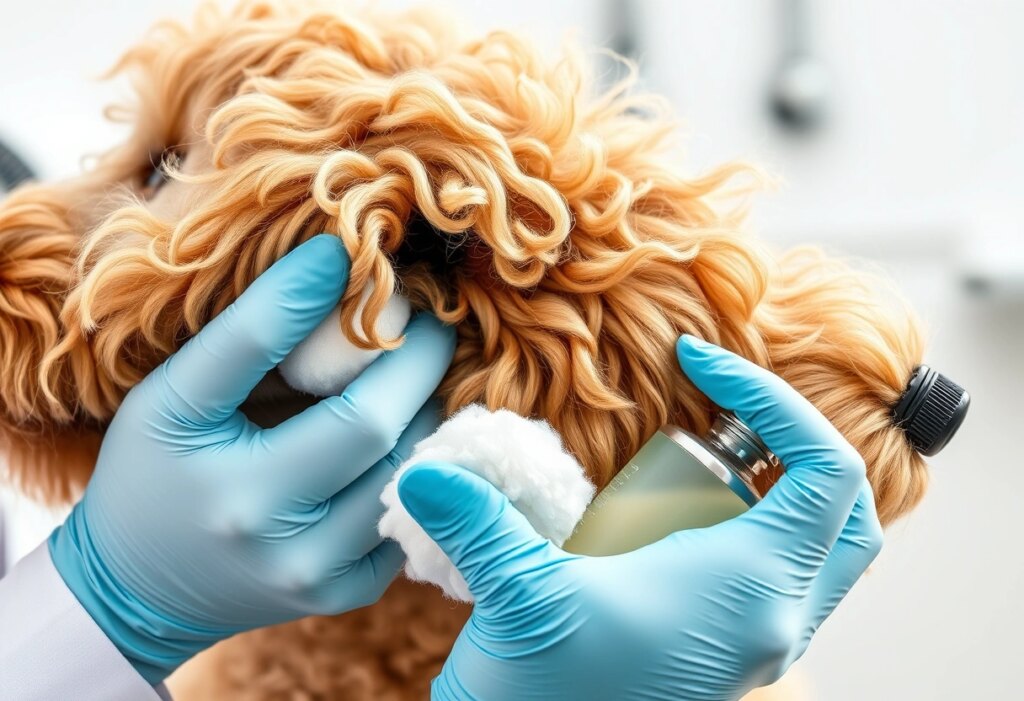
You spot it when you flip back that curly ear flap for a quick scratch session: a streak of brown gunk clinging to the inside of your Doodle’s ear. Your stomach drops a little, and you start wondering if it’s dirt, wax, or something worse. Here’s the direct answer: a dog ear cleaner formulated with pH-balanced, antimicrobial ingredients beats home remedies almost every time, especially for Doodle ears that trap moisture under all that curly hair.
That’s not to say vinegar rinses and other kitchen-cabinet fixes are useless. They have a place for very mild, occasional buildup on healthy ears. But when you’re dealing with recurring brown gunk, odor, or a dog who won’t stop shaking their head, a proper dog ear cleaner gives you a safer, more predictable result. This guide walks through why Doodles are so prone to this problem, how commercial cleaners stack up against DIY mixes, and exactly how to clean ears the right way without causing pain or damage.
Why Doodle Ears Are a Magnet for Brown Gunk
Floppy, hair-covered ears look adorable on a Goldendoodle or Bernedoodle, but they come with a tradeoff. The American Kennel Club notes that breeds with pendulous, hair-covered ears trap moisture and wax at a much higher rate than dogs with upright, prick ears. Air just doesn’t circulate the same way, so the ear canal stays warm and damp long after a bath or a swim.
That warm, dark, humid environment is close to perfect for yeast and bacteria to multiply. Add in the curly, dense hair that many Doodle mixes inherit from their Poodle side, and you’ve got a canal that’s basically insulated. Wax and debris that would dry out and clear on their own in a short-haired, prick-eared dog instead sit there, oxidize, and turn that telltale brown color.
This is why otitis externa, the medical term for outer ear canal inflammation, shows up so often in Doodle health discussions. If you want a broader look at the health issues Doodle owners commonly face beyond just ears, our guide to Goldendoodle health problems covers the full picture, from joints to skin to allergies.
Dog Ear Cleaner vs Home Remedies: A Side-by-Side Look
It helps to see the tradeoffs laid out plainly before you decide what goes in your dog’s ear canal. Below is a quick comparison of the two main approaches pet parents reach for.

- Commercial dog ear cleaner
- Pros: pH-balanced for canine skin, often antimicrobial or antifungal, tested for safety on inflamed tissue, formulated to dry the canal after cleaning
- Cons: costs more upfront than pantry items, requires buying a dedicated product
- Home remedies (apple cider vinegar, hydrogen peroxide, diluted rubbing alcohol)
- Pros: cheap, already in most kitchens, easy to mix in a pinch
- Cons: unpredictable acidity, can sting broken or inflamed skin, no antimicrobial testing for canine ear tissue
A clinical review from Banfield Pet Hospital found that vinegar-based DIY mixes can actively irritate already-inflamed ear canals, and they sting badly on any skin that’s cracked or raw from scratching. That’s an important distinction. A healthy ear might tolerate a mild acidic rinse, but a sore, red, gunky ear is exactly the situation where a home remedy is most likely to cause pain rather than relief.
Here’s a quick reference table comparing a few relevant product types pet parents often reach for when managing ear and eye-area debris on Doodles.
| Product Type | Best Use Case | Vet-Formulated? | Price Tier |
|---|---|---|---|
| pH-balanced dog ear cleaner (liquid rinse) | Routine wax buildup, mild odor, post-swim moisture | Yes | $$ |
| Adhesive ear cleaning stick/wipe | Quick touch-ups, visible debris on the outer canal flap | Partial | $ |
| Apple cider vinegar DIY rinse | Very mild, occasional buildup on healthy ears only | No | $ |
| Hydrogen peroxide DIY rinse | Not recommended for ear canals; too harsh for inflamed tissue | No | $ |
| Tear stain / eye debris wipes | Face-area gunk and tear staining, not for inside the ear canal | Yes | $$ |
If you’re shopping for something more targeted, we’ve put together a full breakdown of the best dog ear cleaners for wax and yeast buildup, and a Doodle-specific roundup of vet-recommended ear cleaners for Goldendoodles if you want options matched to curly, hair-covered ears specifically.
Quick Touch-Ups Between Full Cleanings
Not every gunky moment calls for a full rinse-and-massage routine. Sometimes you just need to catch a smudge of brown residue on the outer flap before it works its way deeper. An adhesive ear cleaning stick is handy for exactly this kind of spot-check, letting you lift surface debris without a full liquid application every single day.

- 【Sticky Tip for Gentle Ear Cleaning】Designed with a soft adhesive tip, these sticky ear cleaning sticks help pick up vis…
- 【Clean Earbuds, Headphones & More】More than an ear cleaning tool, these sticky cleaning sticks are also suitable for rem…
- 【Soft Design with Easy Handling】The lightweight stick design provides better control during use. The soft sticky tip hel…
Think of these sticks as a bridge between full cleanings, not a replacement for a proper dog ear cleaner session. They’re budget-friendly and useful for dogs who tolerate quick handling better than a longer rinse-and-massage routine.
The Step-by-Step Safe Cleaning Protocol
Once you’ve picked a quality dog ear cleaner, the technique matters just as much as the product. Rushing this step, or using the wrong tool, is how ears end up more irritated than when you started.
- Restrain gently. Sit beside your dog, not over them, and keep your hold relaxed. A calm posture keeps your Doodle calm too.
- Fill the canal. Lift the ear flap and squeeze a generous amount of cleaner directly into the canal opening, not just the visible flap.
- Massage the base for 30 seconds. You should hear a soft squelching sound. That means the solution is breaking up wax and debris down where you can’t see it.
- Let your dog shake. Step back and let them shake their head. This is the natural mechanism that brings loosened gunk up and out.
- Wipe with a cotton ball. Use a cotton ball or soft gauze to wipe away visible debris from the outer canal and flap. Never use cotton swabs or Q-tips, since they can pack debris deeper or puncture the eardrum.
Never insert anything rigid into your dog’s ear canal. The canal makes an L-shaped bend, and a cotton swab can push wax and bacteria past that bend instead of removing it, or injure the eardrum entirely.
This same gentle wiping principle applies to tear staining around the eyes, which many curly-coated Doodles also deal with. A dedicated tear stain eye wipe is formulated for the sensitive skin around the eyes, which is a different pH environment than the ear canal, so it’s worth keeping separate products for each area rather than improvising with one for both.

- Pets Eye Wipes:Designed specifically for daily eye care, these pet eye care wipes help remove visible dirt and debris ar…
- Eye Defense Wipes:With a smooth texture that feels gentle on the sensitive skin around the eyes, it can glide easily ove…
- Tear Stain Remover for Pet:Rich in plant extract ingredients, these wipes offer a refreshing cleaning experience and hel…
Making Grooming Days Less Stressful
Ear cleaning sessions go smoother when your dog is relaxed and used to being handled, which is part of why some owners build in a bit of play or dress-up time around grooming to keep things low-pressure. If your Doodle genuinely enjoys a little costume fun as a reward system around bath and grooming days, something like a dog cowboy costume can turn an otherwise tense routine into a lighter, more positive experience for dogs who respond well to novelty and praise.

- 【Funny Cowboy Rider Dog Costume】Turn your furry friend into a funny little cowboy with this unique dog rider costume. Th…
- 【Breathable & Lightweight Pet Clothing】Made with lightweight and breathable fabric, this cowboy pet costume is designed …
- 【Adjustable Saddle Style Fit】Designed with a saddle-inspired structure and adjustable hook-and-loop straps, this dog rid…
Positive reinforcement, treats, and a calm tone go a long way toward making your dog associate the dog ear cleaner bottle with something good rather than something to dread.

When Brown Gunk Means It’s Time to Call the Vet
A little brown wax after a swim is normal. A dog that’s constantly shaking their head, pawing at their ears, tilting their head, or carrying a sour or yeasty odor is telling you something different. The Cornell University College of Veterinary Medicine identifies yeast and bacterial overgrowth as common culprits behind recurring ear gunk, and both require an actual diagnosis rather than a guess-and-check approach at home.
Here’s a quick checklist for deciding whether home cleaning is appropriate or whether it’s time to book a vet visit:
- Mild brown wax, no odor, no redness: safe to clean at home with a gentle dog ear cleaner
- Strong odor (yeasty or foul): see a vet before cleaning
- Redness, swelling, or visible discharge: see a vet before cleaning
- Head shaking, scratching, or whining when the ear is touched: see a vet before cleaning
- Gunk that returns within days of a thorough cleaning: schedule a checkup, since this often points to an underlying infection
Trying a home remedy on an already-infected or inflamed ear doesn’t just fail to help, it can actively delay proper treatment and let a yeast or bacterial infection spread deeper into the canal. When in doubt, a same-week vet visit is always the safer call than another round of DIY troubleshooting.
A Safety-First Takeaway for Doodle Owners
Brown gunk in your Doodle’s ears is common, and most of the time it’s manageable with a consistent routine and the right dog ear cleaner. The key is matching your response to what you’re actually seeing: light, odorless wax calls for routine cleaning, while redness, smell, or head shaking calls for a vet, not a vinegar bottle.
Stick to a pH-balanced, vet-tested cleaner, use the gentle massage-and-wipe technique instead of cotton swabs, and keep an eye on how often the gunk comes back. That rhythm protects your dog’s comfort and keeps small issues from turning into painful ear infections down the road.
Is apple cider vinegar safe to use as a dog ear cleaner substitute?
Only on a healthy ear with mild, occasional buildup and no visible irritation. Diluted apple cider vinegar can sting broken or inflamed skin, so it should never be used on red, swollen, or infected ears. A pH-balanced dog ear cleaner is the safer default choice for most Doodles.
Why do Doodle breeds get more brown gunk in their ears than other dogs?
Doodles typically have pendulous, hair-covered ears inherited from their Poodle lineage, which trap moisture and wax instead of allowing airflow. That warm, damp environment encourages yeast and bacteria to multiply, leading to more frequent brown discharge compared to prick-eared breeds.
Can I use a cotton swab to clean deep inside my dog’s ear canal?
No. Cotton swabs can push wax and debris deeper into the L-shaped canal or injure the eardrum. Stick to squeezing in liquid dog ear cleaner, massaging the base, letting your dog shake, and wiping only the visible outer area with a cotton ball.
How often should I clean my Doodle’s ears to prevent brown gunk buildup?
Most Doodles benefit from ear cleaning once a week, or more often after swimming or bathing when moisture tends to get trapped. Routine use of a vet-approved dog ear cleaner helps prevent the yeast and bacterial overgrowth that leads to recurring gunk and odor.


