


Goldendoodle health problems are the first thing you should research before you hand over a deposit, not after you bring a puppy home. The honest answer is that most Goldendoodles are sturdy, happy dogs, but they can inherit a specific set of conditions from both their Poodle and Golden Retriever lines. Knowing exactly what those conditions are, and how to screen for them, turns a nerve-wracking guessing game into a manageable checklist.
If you’ve been lying awake wondering whether your future puppy is a ticking time bomb of vet bills, take a breath. That fear is normal, and it’s also fixable. This guide walks through the real data on goldendoodle health problems, what responsible breeders should show you, and the exact steps to take once your puppy is home.
How Common Are Goldendoodle Health Problems, Really?
Hip dysplasia is the condition that worries buyers the most, and for good reason. According to data tracked by the Orthopedic Foundation for Animals, hip dysplasia affects an estimated 10 to 20 percent of Goldendoodles, with the exact rate shifting depending on generation (F1, F1B, multigenerational) and the health of the parent lines. That’s not a small number, but it’s also not a coin flip. Dogs from parents with OFA “Good” or “Excellent” hip ratings fall on the lower end of that range.
Elbow dysplasia tends to travel alongside hip issues since both are inherited structural conditions tied to joint development. Larger, fast-growing puppies are more at risk, which is one reason vets caution against free-feeding or over-supplementing calcium in growing Doodle puppies. Slow, steady growth protects joints far better than a rush to adult size.
What the Research Actually Says About Hybrid Vigor
There’s a popular idea that crossbreeding automatically produces healthier dogs. It’s partly true, but the nuance matters. A 2024 study published in Canine Medicine and Genetics found that F1 Goldendoodles (first-generation crosses between a Poodle and a Golden Retriever) showed lower rates of certain inherited diseases compared to purebred Poodles or Golden Retrievers, a pattern consistent with hybrid vigor.
Hybrid vigor can lower the odds of certain single-gene inherited diseases showing up, but it does not grant immunity. A Goldendoodle can still inherit a doubled-up risk for any condition that both parent breeds happen to share, like hip dysplasia or certain eye diseases.
That distinction matters for buyers comparing a Goldendoodle vs Golden Retriever on long-term health outcomes. Hybrid vigor helps with recessive single-gene disorders, but polygenic conditions (those influenced by many genes, like dysplasia) and conditions shared by both parent breeds don’t get the same protective effect.
The Core List of Goldendoodle Health Problems to Screen For
Before you meet a litter, it helps to know exactly what you’re screening against. These are the conditions that show up most consistently in veterinary literature and breed health surveys for Goldendoodles:

- Hip and elbow dysplasia: Malformed joints that cause pain, limping, and early arthritis. Screened through OFA or PennHIP x-rays of the parents.
- Progressive retinal atrophy (PRA): An inherited eye disease that leads to gradual blindness. A DNA test can identify carriers before breeding.
- Von Willebrand’s disease: A blood clotting disorder inherited from the Poodle line that can turn minor injuries or surgeries into serious bleeding events.
- Addison’s disease: An adrenal gland disorder, more common in Standard Poodle lines, that causes vague symptoms like lethargy, vomiting, and poor appetite until it’s caught on bloodwork.
- Chronic ear infections: Goldendoodles often inherit floppy, hair-filled ear canals that trap moisture and wax, making yeast and bacterial infections a recurring issue.
- Gastric dilatation-volvulus (bloat): A life-threatening stomach twist risk that climbs in larger, deep-chested Standard Goldendoodles, especially after large meals or vigorous exercise right after eating.
Ear infections deserve extra attention because they’re the most common everyday complaint among Doodle owners, even if they’re less dramatic than dysplasia or bloat. If you’re already noticing head shaking or odor, our breakdown of dog ear cleaners for wax and yeast buildup covers which formulas actually help versus which ones just mask the smell.
Goldendoodle Health Problems Compared by Generation and Risk Level
Not every Goldendoodle carries the same risk profile. Generation, size, and parent health clearances all shift the odds. Here’s a side-by-side look at how the major concerns stack up.
| Health Concern | Typical Onset Age | Higher Risk In | Screening Method | Price Tier (Testing/Prevention) |
|---|---|---|---|---|
| Hip/Elbow Dysplasia | 6 months – 2 years | Standard & multigen Doodles | OFA or PennHIP x-rays | $$$ |
| Progressive Retinal Atrophy | 3-5 years | Lines without DNA testing | Embark or OFA DNA panel | $$ |
| Von Willebrand’s Disease | Any age (triggered by injury/surgery) | Poodle-heavy lines | Genetic DNA test | $$ |
| Addison’s Disease | 4-7 years | Standard Poodle ancestry | Bloodwork (ACTH stim test) | $$$ |
| Chronic Ear Infections | Puppy through senior years | All generations, floppy ears | Routine home ear checks + vet exam | $ |
| Bloat (GDV) | 2+ years | Large Standard Goldendoodles | Monitoring + risk-reducing feeding habits | $$$$ |
Notice that most of the goldendoodle health problems on this list have a screening tool attached. That’s the good news here. Nearly everything on this table is something a careful breeder can test for before puppies are ever sold, and something you can confirm independently with your own vet.
Grooming-Related Health Issues That Often Get Overlooked
Health isn’t only about joints and bloodwork. Coat maintenance plays a bigger role in Goldendoodle wellness than most new owners expect. Matted fur traps moisture against the skin, which can lead to hot spots, bacterial infections, and painful skin folds that go unnoticed under a thick coat.
Regular brushing with the right tools prevents most of this before it starts. A GoPets Small Pin Slicker Brush works well for daily maintenance on wavy or curly Doodle coats, reaching down to the skin without scratching it.
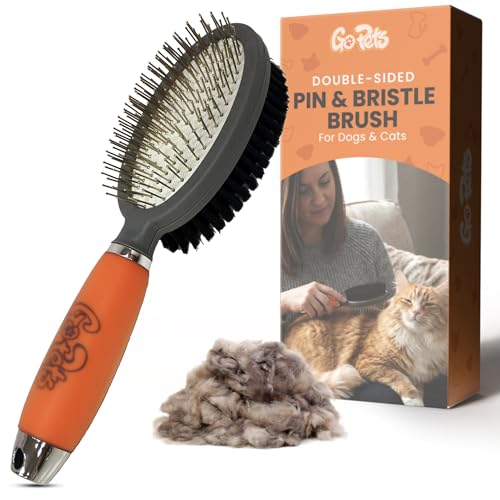
- DOUBLE-SIDED COAT CARE – Built to provide the right comb for any fur type, this pet grooming brush features pin and bris…
- PIN & BRISTLE FUNCTIONALITY – Pin side helps detangle knots, loosen light mats, and reach deeper layers for undercoat ca…
- GENTLE DEEP GROOMING – Designed for deep grooming that remains gentle on pets, helping maintain coat condition while min…
For mats that have already set in, a dedicated detangling comb helps break them up gently instead of ripping them out, which can cause skin tears on sensitive dogs. The Metal Comb for Dogs Grooming Detangler is a straightforward, budget-friendly tool worth keeping in your grooming kit alongside the slicker brush.

- EASY DEMATTING & DETANGLING: Our dog grooming comb features extra-long stainless-steel teeth that glide through tough kn…
- EXTRA LONG PINS: Engineered with PINs that are 30% longer, this dematting comb reaches deeper into dense, curly, or long…
- ERGONOMIC HANDLE: Designed with a non-slip, ergonomic handle, this metal dog comb ensures a secure grip and reduces hand…
Ear maintenance ties into grooming too. Thick ear hair traps debris and should be trimmed or plucked carefully during grooming sessions. If you’re weighing which approach fits your dog’s ears better, this comparison of cotton balls vs. ear wash for Goldendoodle ears breaks down the pros and cons of each method.
Recovery Care: What Happens After an Injury or Surgery
Von Willebrand’s disease and joint problems share one practical overlap: both can mean a longer recovery period after any surgery or injury, including routine procedures like spay or neuter. Dogs recovering from IV catheters, splints, or wound dressings often lick or scratch at the site, which slows healing and risks infection.

Protective covers make recovery periods calmer for both the dog and the owner. The SHFGYG 4-Pack Arm Cast Cover Sleeve Protectors can help keep bandages, IV sites, or healing limbs clean and dry during bath time or outdoor trips, which is especially useful for Doodles recovering from joint surgery or minor cuts.

A Step-by-Step Prevention Checklist Before You Buy
This is the part that actually changes outcomes. Walking into a breeder conversation with these questions ready puts you in control instead of hoping for the best.
- Step 1: Request OFA and CHIC documentation. Ask for both parents’ hip, elbow, eye, and cardiac clearances through the OFA database or CHIC (Canine Health Information Center) certificate. A reputable breeder will have these ready, not promised “later.”
- Step 2: Ask for genetic testing results. DNA panels like Embark screen for von Willebrand’s disease, PRA, and dozens of other inherited conditions. Request to see the actual report, not just a verbal assurance.
- Step 3: Verify breeder transparency. Ask to see the puppy’s parents in person or on video call, tour the whelping area if possible, and ask how many litters the dam has had. Breeders who dodge these questions are a red flag.
- Step 4: Schedule a vet wellness exam within 48 hours of adoption. This gives you an independent baseline on heart, lungs, joints, and general condition, and it starts your relationship with a vet who will know your dog’s history from day one.
- Step 5: Ask about feeding and growth plans. A breeder or vet who recommends a large-breed puppy formula and slow growth monitoring is thinking about joint health proactively, not reactively.
None of these steps are complicated, but skipping them is exactly how avoidable goldendoodle health problems turn into expensive surprises down the road. According to the American Kennel Club, genetic health screening before breeding remains one of the most effective tools for reducing inherited disease rates across all breeds and crossbreeds.
Living With a Healthy Goldendoodle Long-Term
Once your puppy clears that first vet exam, the daily habits matter more than any single test result. Keep ears dry and checked weekly, keep weight in a lean range to protect joints, and keep up with routine bloodwork as your dog ages into the years when Addison’s disease tends to appear.
Goldendoodle genetic conditions aren’t something to panic over, but they are something to plan around. The dogs that live the longest, most comfortable lives tend to belong to owners who treated prevention as a habit, not a one-time checklist.
Doodle health issues get easier to manage once you understand the pattern behind them. Most problems trace back to joints, eyes, blood, adrenal function, or skin and ears, and every single one of those has a screening or management tool attached. That’s not luck. That’s informed ownership.
Final Thoughts on Goldendoodle Health Problems
A thorough goldendoodle buyer guide isn’t meant to scare you away from the breed. It’s meant to arm you with the right questions so you walk into breeder visits and vet appointments as a prepared partner, not an anxious bystander. Goldendoodles are, on balance, resilient and loving companions, and the vast majority live full, active lives when their owners stay proactive rather than reactive.
Partner closely with your vet, keep your screening paperwork organized, and treat prevention as part of your daily routine rather than a one-time hurdle. That approach protects your dog’s comfort every single day, which is really the whole point.
What is the most common health problem in Goldendoodles?
Chronic ear infections are the most frequently reported day-to-day issue, largely because floppy, hair-covered ear canals trap moisture and wax. Hip dysplasia is the most serious structural concern, affecting an estimated 10 to 20 percent of Goldendoodles depending on generation and parent health clearances.
Do Goldendoodles have fewer health problems than purebred Golden Retrievers?
In some areas, yes. A 2024 study in Canine Medicine and Genetics found F1 Goldendoodles showed lower rates of certain inherited diseases than purebred Poodles or Golden Retrievers due to hybrid vigor. However, conditions shared by both parent breeds, like hip dysplasia, still carry meaningful risk and aren’t eliminated by crossbreeding.
What health tests should I ask a Goldendoodle breeder for?
Ask for OFA or PennHIP hip and elbow clearances, an eye exam certificate, and a DNA panel (such as Embark) covering progressive retinal atrophy and von Willebrand’s disease. CHIC certification on both parents is a strong sign of a transparent, health-focused breeder.
How can I reduce the risk of goldendoodle health problems after adoption?
Schedule a full wellness exam within 48 hours of bringing your puppy home, keep growth slow and steady with appropriate food, check ears weekly, and stay current on routine bloodwork as your dog ages. Early detection through regular vet visits remains the single best defense against the conditions outlined in this guide.


