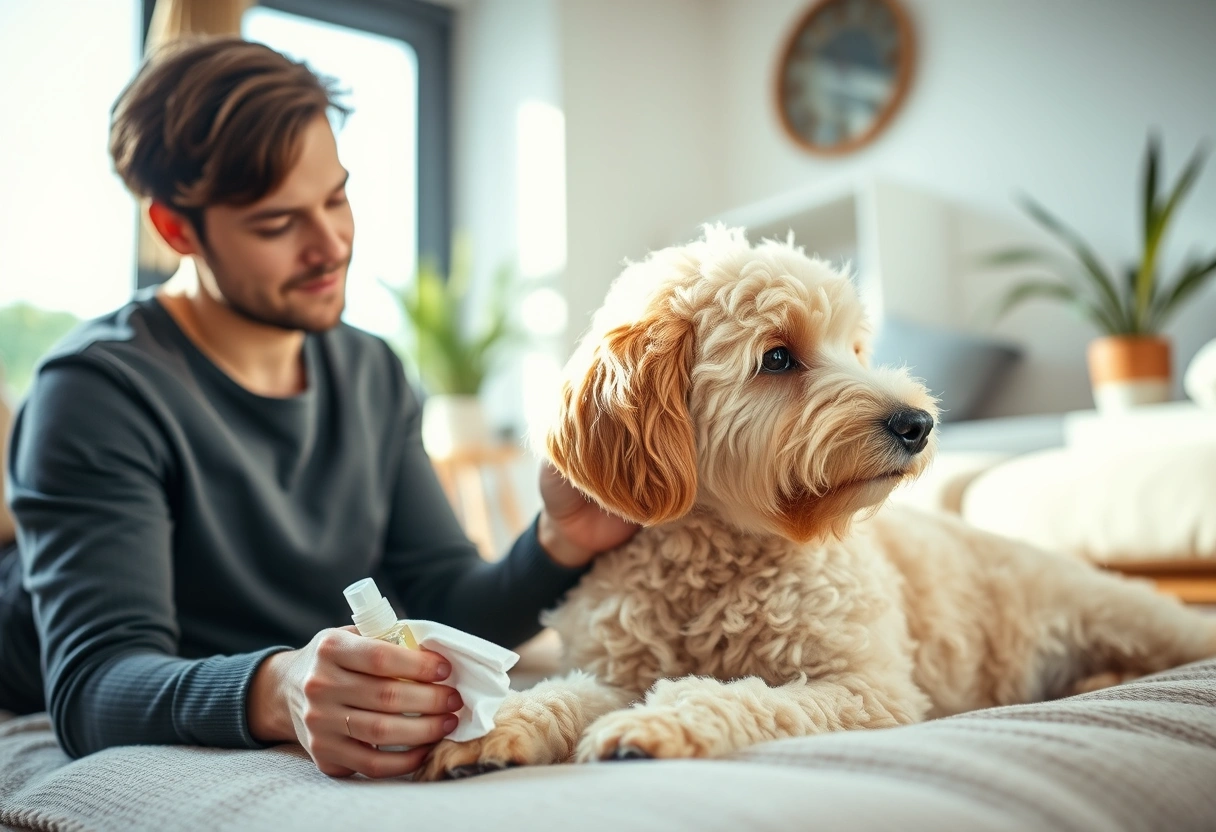
A Goldendoodle ear infection usually announces itself before you even look inside the ear: your dog starts shaking her head, scratching at the same spot over and over, or rubbing her face against the couch like she’s trying to scratch an itch she can’t reach. If you’ve caught that pattern already, you’re in the right place, because getting ahead of a Goldendoodle ear infection at home can save you an unplanned vet bill and a lot of discomfort for your pup.
Goldendoodles are wonderful dogs, but their ears are basically a trap for trouble. The floppy shape combined with all that soft, curly hair growing right in the canal means air doesn’t circulate the way it does in a prick-eared dog like a German Shepherd. Moisture from baths, swimming, or even humid weather gets locked in, and that warm, damp, dark environment is exactly what yeast and bacteria need to multiply. Research published in the Journal of Small Animal Practice has found that floppy-eared breeds experience otitis externa (the medical term for outer ear infection) at notably higher rates than dogs with upright ears. It’s not bad luck. It’s anatomy.
Why Goldendoodles Are So Prone to Ear Infections
Think about what’s happening inside a Goldendoodle’s ear canal on an average day. The hair traps debris, wax, and moisture. The floppy pinna (the outer ear flap) blocks airflow. And because Goldendoodles are often enthusiastic swimmers and frequent bath-takers, water gets introduced regularly without always drying out fully afterward. Add allergies, which many Doodles are prone to, and you’ve got a recipe for chronic irritation.
This is also why so many Doodle owners find themselves treating a goldendoodle ear infection more than once a year. It’s rarely a one-time fluke. Left unmanaged, mild irritation can turn into a full-blown infection, and repeated infections can eventually cause thickening of the ear canal tissue, which makes future infections even harder to clear. That’s the long game reason vets push so hard on prevention, not just treatment.
“An ounce of prevention really does apply to Doodle ears. I tell clients that drying the ear canal after every bath or swim is not optional maintenance, it’s the single biggest thing that keeps chronic ear infections from becoming a lifelong pattern.”
Spotting the Signs Early
Catching a goldendoodle ear infection in its early stages makes home treatment far more realistic. Watch for:
- Head shaking or tilting that seems to come out of nowhere
- A yeasty or musty odor coming from the ear (this is often the very first sign)
- Redness or swelling inside the ear flap or canal opening
- Scratching or rubbing the ear against furniture, carpet, or your leg
- Dark brown, black, or yellowish discharge on a cotton pad after cleaning
- Sensitivity to touch, where your dog pulls away when you touch the ear
If you notice the smell and mild redness but no discharge yet, you’re likely dealing with early-stage irritation, which is exactly when home care has the best shot at working. Once there’s thick discharge, visible pain, or your dog won’t let you touch the ear at all, that’s your cue to call the vet rather than keep experimenting at home.

Vet-Recommended Products for Goldendoodle Ear Infection Care
When a goldendoodle ear infection is confirmed or strongly suspected, veterinary dermatologists typically reach for cleaners formulated with ketoconazole (an antifungal) or chlorhexidine (an antiseptic). These ingredients target the yeast and bacteria overgrowth directly rather than just rinsing debris out. According to Banfield Pet Hospital’s State of Pet Health report, ear infections consistently rank among the top five reasons dogs are brought in for veterinary visits each year, which tells you how common this issue really is across the whole dog population, not just Doodles.
Prescription drying solutions are another piece of the toolkit. These are usually applied after cleaning to evaporate any leftover moisture in the canal, which matters enormously for a breed with hair-lined ears like a Goldendoodle. If your vet has ruled out a ruptured eardrum, these drying agents are generally safe to use as part of a regular maintenance routine, not just during active infections.
For a full breakdown of two of the most commonly recommended over-the-counter and prescription options, our comparison of Zymox vs ACV for treating Goldendoodle ear infections walks through how each performs on inflammation, odor control, and ease of use.
Natural Remedy Options (And Their Real Limits)
Plenty of Doodle owners want to start with something gentler before reaching for medicated products, and for mild, early-stage irritation, that’s a reasonable instinct. Here’s what tends to come up most often:
- Diluted apple cider vinegar rinse (mixed roughly 50/50 with water) can help restore a slightly acidic pH in the ear canal, which discourages yeast growth
- Witch hazel applied with a cotton ball has mild astringent properties that some owners use to reduce minor redness
- Coconut oil is sometimes used for its antimicrobial properties and to soften built-up wax before cleaning
Here’s the caveat that matters most: none of these should touch an ear with an open sore, a strong odor, thick discharge, or visible swelling. Apple cider vinegar in particular will sting like crazy on irritated or broken skin, and it can actually make things worse if the eardrum is compromised. Natural remedies belong in the “mild maintenance” category, not the “active infection” category. If you’ve already tried a natural approach for three or four days and things aren’t improving, stop and get a vet’s opinion rather than cycling through more home remedies.
Omega-3 fatty acids also play a supporting role here, particularly for Doodles whose ear issues are tied to underlying skin allergies. A quality fish oil supplement for dogs can help calm the chronic skin inflammation that often shows up alongside recurring ear trouble, since the two are frequently connected in allergy-prone breeds.

- 2X HIGHER OMEGA-3 DHA & EPA THAN OTHER BRANDS – Our omega 3 fish oil for dogs delivers double the DHA & EPA levels compa…
- WILD-CAUGHT ICELANDIC FISH OIL FOR PURITY & POTENCY – Sourced from pristine Icelandic waters, this skin and coat supplem…
- ADVANCED SKIN & COAT SUPPORT – Say goodbye to itchy, flaky skin! This premium formula offers powerful dry skin relief fo…
Vet Products vs Natural Remedies: A Side-by-Side Look
To make the decision easier, here’s how the two approaches stack up when you’re dealing with a goldendoodle ear infection at different stages of severity.

| Treatment Type | Best For | Active Ingredients | Speed of Relief | Price Tier |
|---|---|---|---|---|
| Medicated Ear Cleaner (Ketoconazole/Chlorhexidine) | Confirmed yeast or bacterial infection | Antifungal, antiseptic | Fast (2-5 days) | $$$ |
| Vet-Prescribed Drying Solution | Post-swim/bath maintenance, chronic moisture | Drying agents, mild acids | Immediate (per use) | $$$ |
| Diluted Apple Cider Vinegar Rinse | Mild irritation, early-stage prevention | Acetic acid | Slow (3-7 days) | $ |
| Witch Hazel Application | Minor redness, non-infected ears | Tannins, mild astringents | Slow (varies) | $ |
| Omega-3 Fish Oil Supplement | Allergy-related chronic ear issues | EPA/DHA fatty acids | Gradual (weeks) | $$ |
A Step-by-Step Home Cleaning Routine
Whether you’re managing a mild goldendoodle ear infection or just doing routine maintenance, the process looks the same:
- Gather supplies first: cleaner solution, cotton balls or gauze pads (never cotton swabs deep in the canal), and treats for cooperation
- Lift the ear flap and gently squeeze a few drops of cleaner into the canal opening
- Massage the base of the ear for about 20 seconds; you should hear a soft squishing sound, which means the solution is working through the debris
- Let your dog shake her head, which naturally brings loosened debris up toward the outer ear
- Wipe the visible canal and flap with a cotton pad, working outward only, never pushing deeper into the canal
- Dry thoroughly with a fresh pad, paying attention to the folds and hair-covered areas
Before starting this routine, it’s worth trimming or plucking the hair around the canal opening so cleaner can actually reach the skin instead of getting absorbed by fur. If you’re unsure whether plucking or leaving the hair alone is safer for your dog’s ear health, our guide comparing ear plucking powder versus no powder breaks down the pros and cons of each method.
Prevention Tips That Actually Work
Consistent prevention beats repeated treatment every time, especially for a breed as ear-infection-prone as the Goldendoodle. A few habits make a real difference:
- Dry ears completely after every bath, swim, or rainy walk, using a soft towel or a cool setting hair dryer held at a safe distance
- Check ears weekly even when nothing seems wrong, so you catch odor or redness before it escalates
- Keep hair trimmed around the ear opening to improve airflow
- Brush out matting near the ears regularly, since matted fur traps moisture against the skin; a good set of deshedding tools designed for Doodle coats makes this part of grooming much easier
- Avoid over-cleaning, since cleaning too frequently can strip the ear’s natural protective oils and actually invite more irritation
Diet plays a quieter but still meaningful role too. Doodles with food sensitivities often show it first in their ears and skin, and supporting overall skin health with the right nutrition can reduce how often infections show up in the first place. According to the ASPCA’s guidance on canine ear infections, addressing underlying allergies is one of the most effective long-term prevention strategies available to pet owners.
When to Stop DIY Care and Call the Vet
Home treatment has real limits, and knowing where that line sits matters more than any specific product you choose. Call your vet right away if you notice any of the following:
- Discharge that’s thick, bloody, or has a strong foul odor even after cleaning
- Your dog crying out or pulling away sharply when the ear is touched
- Swelling severe enough that the canal looks partially or fully closed
- No improvement after 3 to 4 days of consistent home care
- Repeated infections happening more than two or three times a year
A goldendoodle ear infection that keeps coming back despite good home care usually points to an underlying issue like allergies, a hidden foreign object, or even early signs of a chronic condition that needs a proper diagnosis. In those cases, a vet can take a swab and look at what’s actually growing in there under a microscope, which tells you far more than guessing ever could.
Frequently Asked Questions
How can I tell if my Goldendoodle has an ear infection or just needs cleaning?
A routine cleaning need usually shows up as light wax buildup with no odor and no signs of discomfort. A goldendoodle ear infection, on the other hand, comes with a distinct yeasty or musty smell, redness, head shaking, and often visible discharge on a cotton pad. If your dog is scratching frequently or seems bothered when you touch the ear, treat it as a possible infection rather than routine maintenance.
Is apple cider vinegar safe for all Goldendoodle ear infections?
No. Diluted apple cider vinegar is only appropriate for mild, early-stage irritation with intact skin and no open sores. It will sting significantly on inflamed or broken skin and should never be used if there’s thick discharge, strong odor, or a suspected ruptured eardrum. When in doubt, a vet-approved medicated cleaner is the safer choice.
How often should I clean my Goldendoodle’s ears to prevent infection?
Most Goldendoodles do well with a gentle ear cleaning once a week, plus a quick dry-out after every bath or swim. Cleaning more often than that can actually strip protective oils and increase irritation, so weekly maintenance combined with thorough drying after water exposure tends to be the sweet spot for preventing a goldendoodle ear infection.
Can food allergies cause recurring ear infections in Goldendoodles?
Yes, food sensitivities and environmental allergies are among the most common underlying causes of chronic ear infections in Doodle breeds. If your dog experiences a goldendoodle ear infection more than two or three times a year despite good home care, it’s worth discussing an allergy work-up with your vet rather than continuing to treat each flare-up individually.