


If you’re torn between a Goldendoodle vs Golden Retriever because you’ve read the scary cancer statistics and you’re worried about watching a dog you love battle hip dysplasia, you’re not overreacting. That worry is valid, and it’s exactly why so many families research breed health before they ever bring a puppy home.
Here’s the direct answer: Goldendoodles generally benefit from what breeders call hybrid vigor, which tends to translate into a somewhat lower cancer incidence than their purebred Golden Retriever parent. Purebred Goldens, according to the ongoing Golden Retriever Lifetime Study run through Morris Animal Foundation and tracking more than 3,000 dogs, face a documented cancer risk that climbs toward 60% over a lifetime. That single data point drives a lot of the Goldendoodle vs Golden Retriever conversation, and it’s worth unpacking in full before you decide.
This isn’t a simple “mixed breeds always win” story, though. Genetics, breeder practices, and daily care all shape the outcome. Let’s look at the real numbers, the grooming and lifestyle tradeoffs, and what actually protects a dog’s health regardless of what’s printed on the pedigree papers.
Why Golden Retriever Cancer Rates Changed the Conversation
Golden Retrievers are beloved family dogs, but their breed has a genetic predisposition toward specific cancers, especially hemangiosarcoma and lymphoma. The Morris Animal Foundation study has followed thousands of Goldens from puppyhood, and the lifetime cancer figure sitting near 60% isn’t a rumor passed around online forums. It’s a tracked, published statistic.
That number is the single biggest reason the Goldendoodle vs Golden Retriever debate gets so much attention from prospective owners. When a specific health issue affects that many dogs within one breed, pet parents start looking at crosses as a way to potentially reduce the odds.
Hybrid vigor is the biological concept at play here. When you cross two distinct breeds (in this case, Poodle and Golden Retriever), the resulting puppies draw from a wider gene pool. That genetic diversity can dilute the concentration of breed-specific disease markers, including some cancer predispositions, though it doesn’t eliminate risk entirely.

Goldendoodle vs Golden Retriever: The Health Comparison Table
Numbers tell the story better than opinions. Here’s how the two stack up on the health metrics that matter most to pet parents, based on OFA (Orthopedic Foundation for Animals) data and veterinary genetics research.
| Health Factor | Golden Retriever (Purebred) | Goldendoodle (F1 Cross) |
|---|---|---|
| Lifetime Cancer Risk | Approximately 60% (Morris Animal Foundation) | Generally lower, varies by lineage |
| Hip Dysplasia Rate | Approximately 20% (OFA statistics) | Lower reported rates in F1 generation |
| Average Lifespan | 10 to 12 years | 10 to 15 years |
| Shedding/Allergy Impact | Heavy seasonal shedder | Low to moderate, often more allergy-friendly |
| Grooming Needs | Weekly brushing, no professional cuts needed | Frequent brushing, regular professional grooming |
| Genetic Diversity | Narrower gene pool | Broader gene pool (hybrid vigor) |
The hip dysplasia comparison is especially telling. OFA statistics put the purebred Golden Retriever rate near 20%, a figure that reflects decades of breeding within a closed gene pool. Goldendoodles, particularly F1 crosses bred from two healthy, tested parents, tend to show lower reported rates, though exact figures vary widely depending on the Poodle lineage and breeder diligence.
Hybrid vigor isn’t a guarantee of a healthier dog. It’s a statistical tendency that only holds up when both parent breeds are responsibly health-tested. A Goldendoodle from untested parents can inherit the same risks as a purebred Golden, sometimes from both sides.
Lifestyle, Grooming, and Allergy Checklist
Health risk is only part of the goldendoodle vs golden retriever decision. Daily lifestyle fit matters just as much, especially for families managing allergies or a busy schedule.
- Shedding and allergies: Golden Retrievers shed heavily, especially during seasonal blowouts. Goldendoodles typically shed less, which makes them a more comfortable choice for mild allergy sufferers (though no dog is truly hypoallergenic).
- Grooming time: A Golden needs weekly brushing and the occasional bath. A Goldendoodle needs brushing several times a week plus a trip to a professional groomer every four to six weeks to prevent painful matting.
- Exercise needs: Both breeds are active and need 45 to 60 minutes of daily exercise. Neither does well locked in a crate all day.
- Diet sensitivity: Goldendoodles with Poodle ancestry can be more prone to digestive sensitivity, so a consistent, high-quality diet matters more than it might for a Golden.
- Temperament fit: Goldens tend to be slightly calmer as adults. Goldendoodles often retain more Poodle-driven energy and problem-solving drive, which means more mental enrichment is required.
Temperament issues can show up early and linger if they’re not addressed. If you’re dealing with a young dog that’s still mouthy or nippy well past the puppy stage, this guide on a Goldendoodle still biting at one year walks through practical fixes that work for both crosses and purebreds.
Books focused on behavior and care routines can also help bridge the knowledge gap between adopting a puppy and actually managing one day to day. The Pet Series (32 book series) Kindle Edition covers a wide range of care topics that apply directly to new Doodle and Golden Retriever owners alike.

Why Breeder Health Testing Matters More Than the Label
Here’s the part of the goldendoodle vs golden retriever conversation that gets skipped too often: the breed label on the paperwork matters far less than what the breeder actually tested for. A poorly bred Goldendoodle from two unscreened parents can carry just as much risk as a poorly bred Golden Retriever, sometimes more, since you’re combining two sets of potential problems instead of one.
Look for breeders who provide OFA or CHIC (Canine Health Information Center) certification for hips, elbows, heart, and eyes on both parent dogs. This paperwork isn’t optional nice-to-have, it’s the single best predictor of a healthy puppy you’ll find, regardless of whether you’re looking at a Goldendoodle vs Golden Retriever litter.

Responsible breeders will also be upfront about genetic testing for conditions like progressive retinal atrophy and von Willebrand’s disease, both of which show up in Golden Retriever lines and can pass to Goldendoodle offspring.
Behavior and Early Training Considerations
Health isn’t only physical. Behavioral wellness plays a real role in a dog’s long-term quality of life, and both breeds in this comparison are intelligent, people-oriented dogs that need structured early training.
Golden Retrievers are famously food-motivated and easy to train with positive reinforcement, which lowers the risk of fear-based behavioral issues later. Goldendoodles inherit that trainability from the Golden side but add Poodle intelligence, which can mean more boredom-driven mischief if mental stimulation is lacking.
One behavior question that comes up constantly with intact male dogs is whether neutering changes anything. If you’re weighing that decision for your own dog, this breakdown of whether neutering calms a Goldendoodle down covers the actual evidence rather than just the common assumptions.
Puppy biting is another universal concern that owners of both breeds run into during the first year. If bite inhibition hasn’t clicked yet, these bite inhibition tools that actually work can help redirect the behavior before it becomes a bigger problem.
For owners who just want a lighthearted way to celebrate their dog around the house, kitchen and seasonal decor items make a fun, low-stakes gift. The EKGJW Vintage Blue Floral Golden Retriever Kitchen Towel is a budget-friendly way to show some breed pride in the kitchen.
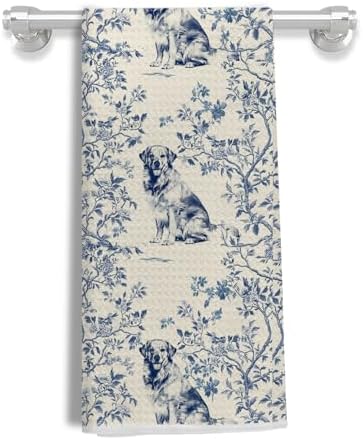
- 【SIZE】Our kitchen towels come in a handy 16×24 inch size, lasts a long time.
- 【Versatile Use】: Perfect for a wide range of kitchen tasks or bathroom, this towel can be used for drying dishes, wiping…
- 【Durability Meets Style】: Built to last, our dish towel is withstand frequent washings without fading or fraying. Its sl…
And if your household leans into fall decorating, the Ninety3POD Spooky Halloween Night Witch Golden Retriever design adds some seasonal flair for Golden Retriever and Doodle owners alike.

- ⚡ OPTION: pillowcase only or pillowcase with pillow gut. Both in square or rectangle shape. ✅✅✅ Click “Customize” button…
- ⚡ MATERIAL: made of 100% poly oxford fabric. Machine-washable case
- ⚡ COOL STYLE: Distinct textured weave with premium sublimation printing technology. Suitable for home, bedroom, living r…
Making the Final Call: A Safety-First Takeaway
So where does that leave the goldendoodle vs golden retriever decision? If lowering cancer risk and extending potential goldendoodle lifespan are your top priorities, the hybrid vigor argument gives Goldendoodles a real statistical edge. A Goldendoodle lifespan stretching toward 15 years, compared to a Golden’s typical 10 to 12, is meaningful for a family hoping for more years together.
But that edge only holds up with responsible sourcing. A Goldendoodle from a backyard breeder with no health testing isn’t automatically healthier than a well-bred Golden Retriever from a breeder who screens for hips, heart, and eyes. The dog in front of you matters more than the breed category it falls into.
Before you commit, ask every breeder for OFA or CHIC documentation on both parents, request to meet the parent dogs in person if possible, and avoid any breeder who can’t produce health paperwork on demand. That single step does more to protect your future dog’s wellbeing than any breed comparison chart ever could.
Is a Goldendoodle really healthier than a Golden Retriever?
Generally, yes, due to hybrid vigor from a wider gene pool, but only when both parent breeds have been properly health tested. A Goldendoodle vs Golden Retriever comparison favors the Doodle statistically, but individual breeding quality matters more than the breed label.
What is the average goldendoodle lifespan compared to a Golden Retriever?
Golden Retrievers typically live 10 to 12 years, while the goldendoodle lifespan often extends to 10 to 15 years. The longer potential lifespan is largely attributed to reduced breed-specific cancer risk from hybrid vigor.
Do Goldendoodles still get hip dysplasia?
Yes, hip dysplasia can still occur in Goldendoodles, though OFA statistics suggest lower reported rates in F1 crosses compared to the roughly 20% rate seen in purebred Golden Retrievers. Choosing a breeder with OFA-certified parents significantly lowers this risk.
Does hybrid vigor actually reduce cancer risk in dogs?
Hybrid vigor describes the genetic diversity benefit seen in crossbred dogs, which can dilute concentrated disease markers found in purebred lines. It’s a documented tendency supported by hybrid vigor dogs research, though it isn’t an absolute guarantee against cancer or other hereditary conditions.


